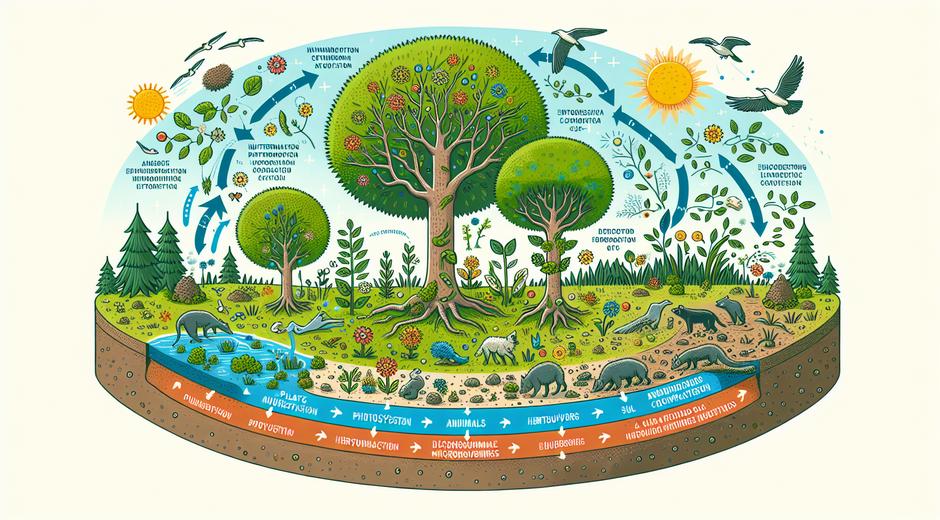


Plant Ecology: Understanding How Plants Shape and Respond to Their Environment
Plant Ecology is a vital branch of ecology that explores how plants interact with each other and with their physical environment. From tiny mosses on a rock to towering forest trees that shape climate at a local scale, plants determine energy flow water cycles and habitat structure. For nature lovers researchers and land managers a clear grasp of Plant Ecology helps inform conservation actions restoration projects and sustainable landscape planning.
Core Principles of Plant Ecology
At its heart Plant Ecology examines the distribution abundance and performance of plant species across space and time. Key concepts include adaptation competition facilitation and resource use. Plants adapt to light water nutrient and temperature regimes through morphology physiology and life strategy. Competition for light and soil resources shapes who succeeds in a given place while facilitation through shade nursing and soil improvement can help other plants establish. Understanding these interactions explains patterns of vegetation across mountains plains wetlands and urban settings.
Plant Adaptations and Functional Traits
Plant adaptations range from leaf shape and root architecture to flowering timing and seed dispersal modes. Ecologists study functional traits such as leaf area specific leaf weight root depth and seed mass to link traits to ecosystem processes. For example plants with high specific leaf weight often conserve nutrients and resist herbivory while plants with thin leaves may grow fast under abundant resources. Trait based approaches allow predictions about how vegetation will respond to environmental change and guide species selection for restoration.
Community Assembly and Biodiversity
Plant communities form through a combination of dispersal local environmental filtering and biotic interactions. Species that can reach a site with suitable traits will persist while others will be excluded. This assembly process influences biodiversity which in turn affects ecosystem function. Diverse plant communities often provide more stable productivity and greater resistance to pests and extreme events. Managing for biodiversity therefore supports ecosystem services such as pollination soil stabilization and carbon storage.
Succession and Long Term Change
Succession describes the directional change of plant communities after disturbance. After a wildfire or flood early colonizing species create soil conditions that enable later species to establish. Over decades and centuries this process can lead from open fields to shrublands to mature forests depending on climate soils and disturbance regimes. Understanding succession is essential for restoration planning because it guides expectations about natural recovery and informs interventions where recovery is slow.
Plant Ecology Across Scales
Plant Ecology operates at multiple scales from cells and individual plants to landscapes and biomes. At the local scale physiologists measure water use gas exchange and nutrient uptake. At larger scales ecologists map vegetation patterns and model how climate soil and human land use shape plant distributions. Remote sensing and landscape modeling now allow tracking vegetation change across continental extents. Linking processes across scales is a major challenge and opportunity because managing land effectively requires both detailed local knowledge and broad scale understanding.
Soil Plant Interactions and Below Ground Ecology
Below ground processes are central to Plant Ecology. Roots mediate water and nutrient uptake while soil microbes such as mycorrhizal fungi and nitrogen fixing bacteria strongly influence plant performance. Rhizosphere interactions control decomposition nutrient cycling and soil structure. Healthy soils with active microbial communities often promote plant diversity and resilience. Restoration that ignores below ground ecology risks failure because plants depend on complex soil networks to thrive.
Plant Ecology in a Changing Climate
Climate change alters temperature patterns precipitation and the frequency of extreme events which in turn shifts plant distributions phenology and ecosystem function. Some species migrate to new areas others adapt locally while some decline or disappear. Plant Ecology provides tools to forecast these changes identify climate refugia and design assisted migration or seed sourcing strategies for conservation. Combining field experiments long term monitoring and predictive models improves our capacity to anticipate and respond to climate driven vegetation shifts.
Methods and Tools in Plant Ecology
Modern Plant Ecology blends classical field observation with experimental manipulations and advanced technologies. Common methods include vegetation sampling permanent plots manipulative experiments and trait measurement. Tools range from soil probes and gas exchange systems to drone and satellite imagery. Genetic techniques and stable isotope analysis reveal population structure and resource pathways. Integrating multiple methods yields robust insights that support evidence based management.
Applications in Conservation and Restoration
Plant Ecology directly informs conservation planning restoration and sustainable agriculture. Ecologists identify priority sites species interactions and ecological thresholds that must be maintained to preserve ecosystem function. Restoration projects use knowledge of succession species pools and soil conditions to select appropriate species and interventions. Urban planners incorporate plant ecology to design green infrastructure that cools cities filters water and supports biodiversity. For practical guidance and a broad library of nature articles visit bionaturevista.com for curated resources and project ideas.
Economic and Policy Connections
While Plant Ecology is primarily ecological science its findings influence economics and policy. Valuation of ecosystem services such as carbon sequestration water purification and flood mitigation supports investment in natural capital. For professionals seeking insight on funding mechanisms grants and economic frameworks that support ecological projects consider the resources available at FinanceWorldHub.com which connects environmental practice to financial planning.
How to Study Plant Ecology
Students and early career researchers can enter Plant Ecology through undergraduate courses field internships and citizen science projects. Building skills in field sampling statistics remote sensing and experimental design is essential. Volunteering with local conservation groups participating in vegetation surveys and working on a restoration site provides hands on experience. Publishing clear accessible results and connecting with interdisciplinary teams increases the impact of ecological research.
Challenges and Future Directions
Major challenges for Plant Ecology include integrating biodiversity data across scales improving predictions of novel climates and translating scientific knowledge into policy and practice. Emerging areas such as urban ecology alpine plant responses and plant microbiome research are expanding the field. Increased collaboration between ecologists social scientists planners and economists will help align conservation science with human needs and values.
Conclusion
Plant Ecology offers essential insight into how vegetation shapes and responds to its surroundings. By linking physiology population dynamics community assembly and ecosystem processes the field supports conservation restoration and sustainable land use. Whether you are a researcher practitioner or nature lover applying Plant Ecology principles improves the chances of preserving healthy resilient landscapes for future generations. Explore practical guides research highlights and project stories at our site and consider financial planning resources that can help scale conservation efforts.