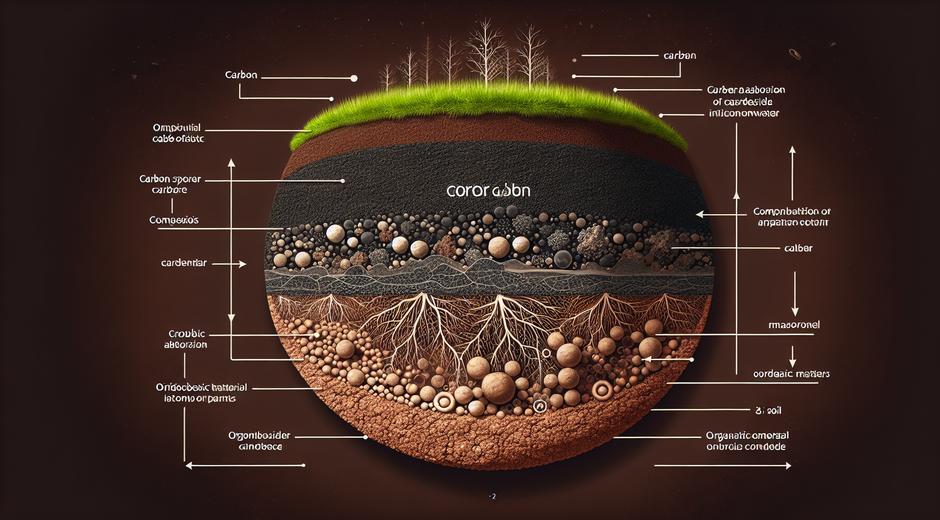


Soil Carbon The Hidden Engine of Land Health and Climate Balance
Soil Carbon is one of the most powerful natural regulators of plant growth water storage and climate stability. It represents the carbon contained in soil organic matter and plays a central role in nutrient cycling soil structure and the resilience of ecosystems. For land managers farmers conservationists and anyone who cares about the future of food systems and climate the science and practice of managing soil carbon offer both promising solutions and urgent challenges.
What Is Soil Carbon and Why It Matters
Soil Carbon refers to organic carbon made up of decomposed plant roots microbes and other organic residues that persist in soil. This pool of carbon is distinct from carbon stored in living biomass such as trees and shrubs. Soil Carbon influences how well soil holds water supports beneficial microbes and supplies nutrients to plants. Healthy levels of soil carbon correlate with improved crop yields reduced erosion and higher biodiversity.
From a climate perspective soil acts as a huge reservoir able to store vast amounts of carbon for decades to centuries. When soils lose carbon through poor management or land conversion that carbon can return to the atmosphere as CO2 accelerating climate warming. Conversely practices that increase Soil Carbon can remove CO2 from air and lock it into the ground making soil a critical component of natural climate solutions.
How Soil Carbon Supports Ecosystem Services
Soil Carbon improves soil structure by binding mineral particles into aggregates that allow roots and water to move freely. This improves infiltration and reduces runoff so landscapes are better able to absorb intense rainfall events. Organic carbon also provides energy and habitat for soil organisms that decompose residues fix nitrogen and cycle phosphorus making these nutrients available to plants.
Higher Soil Carbon increases water holding capacity which is essential during dry spells. In many regions increasing Soil Carbon translates directly into higher resilience against drought and extreme weather. For farmers this means more stable yields and lower need for irrigation or synthetic inputs. For natural ecosystems higher Soil Carbon supports diverse plant communities and healthy food webs.
Measuring Soil Carbon Reliable Methods and Practical Tips
Accurate measurement is essential to track changes in Soil Carbon and to design management strategies. Standard approaches include laboratory analysis of soil samples using combustion methods to quantify organic carbon. Emerging technologies such as near infrared spectroscopy and remote sensing tools are adding speed and scale to monitoring efforts.
Sampling design matters more than you might expect. Because Soil Carbon varies with depth land type and management a good program includes multiple sample points stratified by management or landscape position and consistent sampling depth. Many community science projects and conservation programs provide step by step protocols to make monitoring accessible to land stewards and small scale producers.
Practical Practices to Build Soil Carbon
There is no single recipe that fits all contexts but several management principles are widely effective across climates and cropping systems. Increasing the amount and continuity of plant cover on land adds organic inputs to soil. Using diverse rotations and integrating perennial species such as grasses legumes and certain shrubs can increase root derived carbon inputs that stabilize Soil Carbon deeper in the profile.
Reducing soil disturbance lets organic matter accumulate by limiting the exposure of soil microbes to fresh organic matter that decomposes rapidly. Maintaining living roots means carbon flows into soil year round supporting a stable community of microbes that help form persistent soil carbon compounds. Adding organic amendments such as compost or bio based residues can also accelerate gains where organic inputs are scarce.
Linking Soil Carbon to Economic Opportunities
As interest grows in carbon markets and payments for ecosystem services many land managers seek credible ways to quantify and monetize Soil Carbon gains. Transparent measurement combined with good record keeping and verified methods can enable access to new income streams. Farmers and land stewards exploring this pathway should seek reliable partners and tools to ensure claims are robust and benefit sharing is fair. For practical tools and services that support monitoring and reporting visit Zoopora.com where technology resources are tailored to field scale needs.
Soil Carbon Across Different Land uses
Grasslands forests cropland and wetlands each store and cycle carbon in different ways. Wetlands for example accumulate organic matter under low oxygen conditions making them highly efficient carbon sinks. Restoring degraded wetlands and avoiding drainage in peat rich soils can prevent large carbon losses. Forest soils often have complex layers of litter and humus that hide substantial carbon pools. In cropland systems practices that rebuild soil organic matter can reverse historical declines and restore multiple benefits at the same time.
Understanding the local context is key. Climate soil texture and native vegetation all shape how management will affect Soil Carbon. Adaptive management that tracks changes and adjusts practices season by season offers the most reliable route to durable gains.
Policy Science and Community Action
Policy incentives that align reward with conservation measured outcomes can accelerate adoption of Soil Carbon building practices. Scientific advances are giving policymakers more confidence in setting realistic targets and in designing programs that are both effective and equitable. Community led initiatives play a central role in sharing knowledge and demonstrating success at landscape scale. Farmers and conservation groups that share data and lessons create momentum and reduce the learning curve for others.
If you are seeking more articles case studies or practical guides on how to care for soil and build Soil Carbon consider exploring our broader resource library at bionaturevista.com where we curate science based content for land stewards and nature lovers.
Challenges and Trade offs to Keep in Mind
Although building Soil Carbon offers clear benefits there are trade offs and constraints. Gains may be slow and require persistent effort over many years. Some strategies may increase methane or nitrous oxide under certain conditions so careful management and whole system thinking are necessary to ensure net climate benefits. Social factors such as land tenure access to capital and labor availability also shape what practices are feasible for any given land manager.
Research continues to refine practices and to quantify co benefits in terms of biodiversity water quality and human well being. The best outcomes come from local partnerships that combine science practical experience and fair incentives for those who steward the land.
A Call to Action
Soil Carbon is a major lever for sustainable agriculture ecosystem resilience and climate action. Growing Soil Carbon is both a technical challenge and a civic opportunity that benefits communities and nature. By measuring soil carbon investing in adaptive practices and sharing knowledge we can restore degraded soils increase food security and help stabilize the climate.
Whether you are a gardener a farmer a researcher or a policy maker every step toward building Soil Carbon matters. Start by learning more about your soils testing regularly and trying one or two management changes that fit your landscape. Over time these choices add up to meaningful results for people and the planet.
For more guides and local examples that show how Soil Carbon can be increased in practical ways visit our site and browse case studies tools and expert interviews at bionaturevista.com to deepen your understanding and find support for action.