

River Basin Ecology
Introduction to River Basin Ecology
River basin ecology explores the complex relationships among water flow patterns soil types plant communities animal populations and human activities within the drainage area of a river. A river basin is a dynamic living system where physical processes such as runoff erosion and sediment transport interact with biological processes such as nutrient cycling habitat formation and species migrations. Understanding river basin ecology is essential for conserving biodiversity supporting clean water supplies and for sustainable land and water management.
Why River Basin Ecology Matters
Healthy river basins provide many ecosystem services. They filter pollutants stabilize soil reduce the risk of extreme floods and support fisheries that local communities depend on. Rivers link upland areas to coastal areas and create corridors for species movement. Protecting river basin integrity is also vital for cultural values and for livelihoods across urban and rural landscapes. For readers seeking more nature resources this site maintains a broad collection of articles and guides at bionaturevista.com that explore rivers forests wetlands and related topics.
Key Components of River Basin Ecology
River basin ecology is shaped by several interdependent components. Hydrology determines how much water moves through the system when and in what form. Geomorphology defines the shape of the river channel and the floodplain which affects habitat complexity. Water chemistry sets the stage for which species can thrive. Riparian vegetation stabilizes banks provides shade and contributes organic matter. Aquatic and terrestrial communities respond to the combined influence of these components creating a mosaic of habitats and functions.
Hydrology and Flow Regime
Flow regime is a core concept in river basin ecology. It includes the timing magnitude frequency duration and rate of change of water flow. Natural flow regimes support life cycles of many aquatic organisms for example certain fish species depend on spring flood pulses for spawning while amphibians use seasonal pools for reproduction. Human alterations to the flow regime from dams water withdrawals or land cover change can simplify habitat reduce connectivity and disrupt ecological cues that species rely on. Restoring more natural flow variability is often a central aim in basin management to recover ecological function.
Biotic Communities and Biodiversity
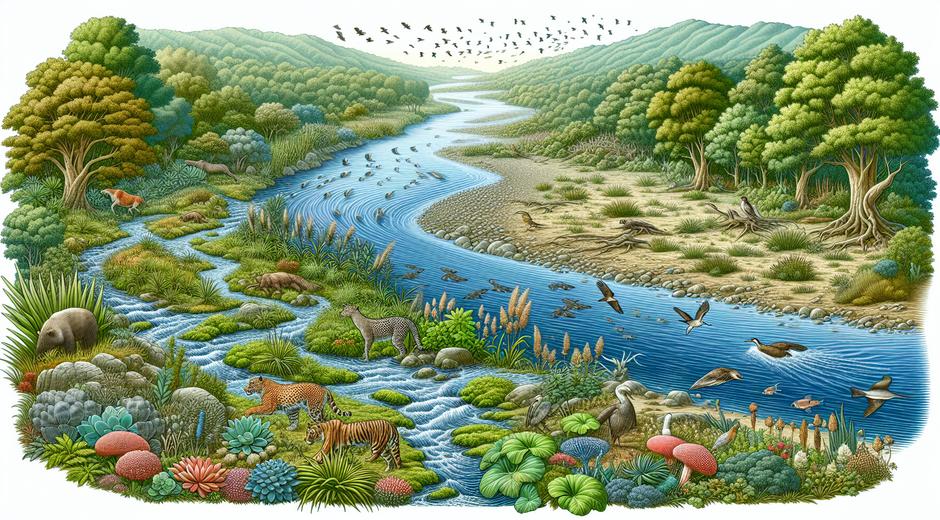
River basins host rich biodiversity from microscopic algae and invertebrates to macrophytes fish birds and mammals. The diversity of habitats such as riffles pools side channels oxbow lakes and wetlands supports unique assemblages of species. Riparian forests act as buffer zones and provide leaf litter that fuels food webs. Connectivity along the river corridor allows seasonal migration and genetic exchange. Conservation of biodiversity requires maintaining habitat heterogeneity water quality and connectivity across the basin.
Nutrient Cycling and Water Quality
Nutrient cycling in a river basin involves inputs from soils and vegetation point sources and atmospheric deposition. Microbial communities transform nutrients altering their bioavailability and residence time. Excess nutrient loads from agriculture or urban runoff can lead to eutrophication harmful algal blooms and oxygen depletion that threaten aquatic life. Healthy river systems with intact wetlands floodplains and vegetation can retain and process nutrients reducing downstream impacts. Management actions that target nutrient sources and promote natural filtration processes are effective pathways to improved water quality.
Riparian Zones and Floodplains
Riparian zones and floodplains are the interface between land and water. They provide critical habitat and act as natural buffers during high flows. Floodplains store floodwaters deposit sediments and maintain groundwater recharge. When floodplains are disconnected by levees channelization or development their ecological and hydrological functions decline. Restoring floodplain connectivity can enhance biodiversity improve water storage and reduce flood risks in ways that engineered structures alone cannot match.
Human Impacts and Land Use
Land use changes in a river basin have profound effects. Urban expansion increases impervious surfaces intensifying runoff and transporting pollutants into rivers. Agricultural practices influence sediment and nutrient loads. Forestry practices can alter erosion rates and stream temperature. Water extraction for irrigation or municipal supplies changes flow regimes. Climate change adds another layer of pressure altering precipitation patterns and increasing extreme events. Sustainable land use planning and integrated basin management are key to balancing human needs with ecological resilience.
Integrated Basin Management Strategies
Integrated basin management recognizes the need to coordinate actions across sectors and jurisdictions within the basin. Strategies include protecting headwater areas implementing best practice farming to reduce runoff restoring riparian vegetation and re connecting floodplains. Adaptive management uses monitoring feedback to refine actions over time. Engaging communities and stakeholders builds shared understanding and supports long term stewardship. By linking scientific knowledge with local knowledge managers can design interventions that are practical equitable and effective.
Tools for Research and Monitoring
Modern tools make it possible to monitor river basin health at multiple scales. Remote sensing and geographic information science provide landscape level information on land cover and change. Sensor networks collect continuous data on water level temperature and quality. Hydrologic and ecological models help simulate scenarios and forecast outcomes of management actions. Advances in data platforms enable open sharing of observations to support collaborative decision making. Technology providers and research groups contribute equipment software and expertise and some vendors now offer integrated solutions that support field data collection and analysis such as Techtazz.com which provides tools for environmental monitoring and for data visualization.
Restoration Approaches
Restoration in river basins often aims to recover flow regimes re establish habitat complexity and improve water quality. Actions may include removing obsolete dams re creating side channels planting native riparian vegetation and implementing soil conservation practices. Successful restoration is grounded in clear objectives based on science stakeholder engagement and long term maintenance. Measuring outcomes through ecological indicators such as species recovery water clarity and nutrient levels helps document successes and guide future work.
Policy and Governance
Effective governance frameworks set the rules for water allocation land use and pollution control across a basin. Policies that promote integrated planning and cross jurisdiction collaboration are essential. Economic instruments such as payments for ecosystem services and incentives for conservation friendly practices can align private actions with public benefits. Transparent decision making supported by accessible data builds trust among stakeholders and improves compliance. International river basins require cooperation among countries to manage shared resources and to prevent conflicts.
Community Stewardship and Education
Local communities play a central role in river basin health. Education programs citizen science projects and local restoration initiatives empower people to protect their waterways. When rivers provide clean water food and recreation communities have strong incentives to sustain them. Indigenous and traditional practices often embody long standing stewardship that can inform contemporary management. Building partnerships that respect local rights and knowledge strengthens conservation outcomes.
Conclusion
River basin ecology integrates hydrology geology biology and human dimensions to explain how river systems function and how they can be conserved. Maintaining healthy basins requires a mix of science based management restoration community involvement and adaptive governance. Whether the focus is on biodiversity water quality flood risk reduction or cultural values a basin wide perspective yields better outcomes. By investing in monitoring research and collaborative action we can sustain the life supporting services that rivers provide now and for future generations.