

Freshwater Ecosystems: Vital Habitats and How to Protect Them
Freshwater ecosystems are among the most important natural systems on earth. They include lakes rivers streams ponds and wetlands and support rich biodiversity while providing essential services to people and to other species. Understanding the structure function and threats to Freshwater Ecosystems is key for long term conservation and for sustaining the wellbeing of communities that depend on clean water food and natural flood control.
Freshwater Ecosystems form the backbone of many landscapes. They connect upland forests to coastal seas support migratory routes for fish and birds and serve as nurseries for countless aquatic lifeforms. The way these systems function depends on water flow chemistry vegetation and the interactions among organisms. Healthy Freshwater Ecosystems maintain water quality cycle nutrients and provide habitats that allow species to thrive.
What Are Freshwater Ecosystems
Freshwater Ecosystems are natural systems that contain fresh water rather than salt water. They vary in size and in their physical and chemical characteristics. Streams often have flowing water and can be oxygen rich. Lakes and ponds may be deeper and stratify into layers with different temperatures and oxygen levels. Wetlands are areas where soils are saturated for long periods and they perform key filtration functions that remove sediments pollutants and excess nutrients from water.
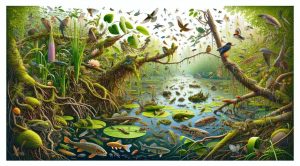
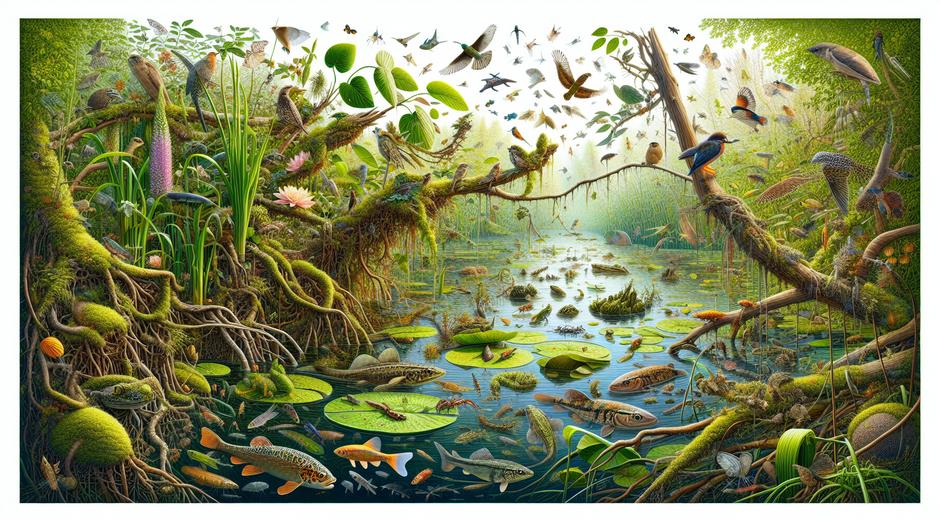
Each type of Freshwater Ecosystem supports distinct communities of plants animals fungi and microorganisms. Algae and aquatic plants form the base of many food webs while invertebrates such as insects snails and crustaceans serve as crucial prey items for fish and amphibians. Predatory fish water birds and mammals integrate these systems into broader foodchains.
Types of Freshwater Ecosystems
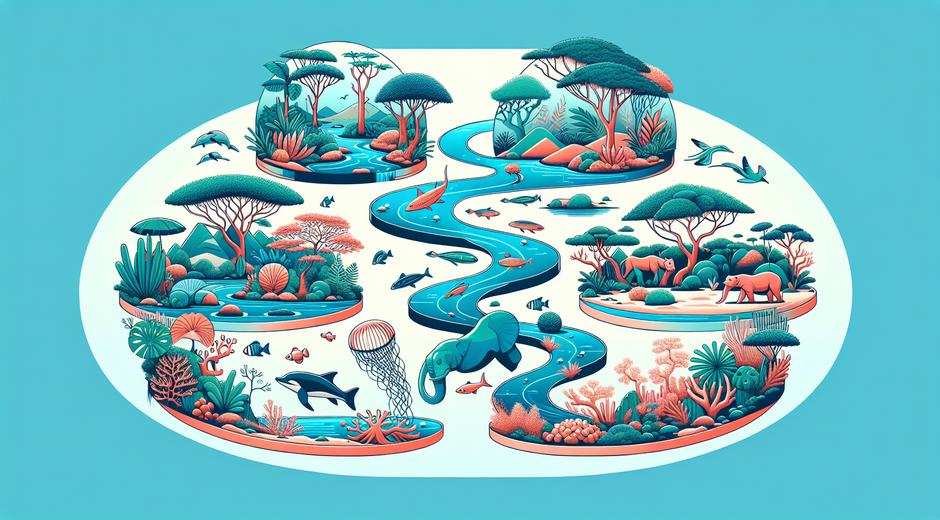
Freshwater Ecosystems can be grouped into several broad types:
– Streams and Rivers: Flowing waters that shape landscapes and transport nutrients and sediments. They connect headwaters to larger rivers and to lakes and seas.
– Lakes and Ponds: Standing waters that range from small garden ponds to large inland lakes. They support plankton fish and water dependent birds.
– Wetlands: Marshes swamps and bogs that hold water at or near the surface. They act as natural filters and as buffers against floods.
– Groundwater Systems: Aquifers and springs store vast volumes of freshwater underground and sustain base flow to rivers and wetlands.
Each type plays a role in regional hydrology and biodiversity and each responds differently to human pressures and to climate variability.
Biodiversity in Freshwater Ecosystems
Freshwater Ecosystems host disproportionately high biodiversity relative to their area. They support a large share of global vertebrate species including fish amphibians and freshwater mammals. Many freshwater invertebrates are highly specialized and endemic to single drainage basins making them vulnerable to changes in water quality and habitat fragmentation.
Diverse plant communities including submerged emergent and floating species provide food shelter and spawning grounds. Microbial communities transform nutrients and influence water chemistry. The resilience of Freshwater Ecosystems depends on this diversity which also underpins ecosystem services that humans rely on.
Ecosystem Services and Human Benefits
The services delivered by Freshwater Ecosystems are essential for both nature and society. They provide drinking water irrigation for crops and water for industry. They support fisheries that supply protein for millions and provide livelihoods for communities. Wetlands store water and reduce the impacts of floods and droughts while also filtering pollutants and improving water quality.
Recreation and cultural values are also important. Rivers and lakes support boating fishing and wildlife watching and many cultures maintain spiritual connections to freshwater places. Protecting these systems preserves not only biological resources but also social and economic wellbeing.
Threats to Freshwater Ecosystems
Freshwater Ecosystems face multiple threats from local to global scales. Land use change and urban expansion convert habitats and increase runoff pollution. Unsustainable extraction of water for agriculture and for cities reduces flows and alters seasonal dynamics. Pollution from nutrients sewage and industrial sources degrades water quality and can create zones where few species can survive.
Invasive species can displace native flora and fauna and disrupt food webs. Climate change shifts precipitation patterns and increases water temperatures which can alter stratification in lakes and reduce oxygen availability for aquatic lifeforms. Dams and channelization fragment habitats preventing migration and altering sediment and nutrient transport.
Because many freshwater species have small ranges and specific habitat needs the cumulative effect of these threats has led to steep declines in populations and to local extinctions in some regions.
Conservation Strategies and Best Practices
Effective conservation of Freshwater Ecosystems requires integrated approaches that link land management water policy and community engagement. Protecting catchment areas and restoring riparian vegetation helps reduce erosion and filter pollutants before they enter streams and lakes. Sustainable water allocation that accounts for ecological flows can maintain the seasonal pulses many species need to reproduce and migrate.
Reducing point source pollution through improved wastewater treatment and managing nutrient runoff from agriculture using buffer strips and cover crops are practical measures. Removing obsolete dams and restoring natural flow regimes where possible improves connectivity and habitat complexity. Monitoring programs that track water quality species abundance and the spread of invasive species support adaptive management.
Working with local communities and stakeholders ensures that conservation measures are equitable and that traditional knowledge informs management. Education and citizen science programs encourage stewardship and create local capacity to monitor and protect Freshwater Ecosystems.
For readers who want a central resource covering nature themes and practical conservation work visit bionaturevista.com for articles guides and community projects that highlight freshwater conservation initiatives.
How You Can Help Local Freshwater Ecosystems
Individual actions add up. Reducing the use of household chemicals and disposing of hazardous waste properly keeps pollutants out of waterways. Planting native vegetation along streams and avoiding the removal of shoreline plants helps maintain habitat for fish birds and insects. Reducing water use by fixing leaks and adopting efficient appliances protects base flows that sustain ecosystems in dry seasons.
Participating in local cleanups and supporting conservation organizations increases community capacity to manage threats. If you enjoy fishing follow sustainable harvest rules and support catch release where needed to protect vulnerable populations. Volunteer for monitoring programs or learn to identify local species to contribute to citizen science datasets.
Businesses and farms can adopt best practices to reduce runoff use water efficiently and restore wetlands on their land to provide filtration and habitat.
Resources for Further Reading
Learning more about Freshwater Ecosystems helps build the knowledge base needed to act effectively. Many organizations provide identification guides conservation tools and community outreach resources. For aquatic species guides and habitat information consider checking a specialized resource such as Zoopora.com which offers tools for identification and for monitoring freshwater biodiversity.
Scientific literature and policy reports from conservation agencies are also valuable for understanding large scale trends and for designing management plans. Local conservation groups often provide region specific information and volunteer opportunities that connect you to on the ground work.
Conclusion
Freshwater Ecosystems are essential to planetary health human wellbeing and to the diverse species that depend on them. Protecting these systems requires coordinated action across sectors and scales from individual stewardship to national policy. By understanding the functions values and threats to Freshwater Ecosystems we can implement practical measures that restore water quality preserve biodiversity and ensure resilient habitats for future generations.
Take time to learn about the waterways near you engage with community projects and support science based management. Healthy freshwater systems sustain life in ways that touch every part of our world.