

Animal Adaptations: How Life Fits Form and Function
Animal Adaptations are the traits that allow creatures to survive and reproduce in the environments where they live. From the deserts to the deep sea the diversity of solutions that evolution has produced is vast and inspiring. This article explores how animals change their bodies and behavior to cope with climate food scarcity predators and mates. Understanding these natural innovations helps scientists preserve species design new technologies and appreciate the logic of life on Earth.
What Are Animal Adaptations
An adaptation is any physical trait physiological process or behavioral pattern that increases an individual chance to survive and to reproduce in its environment. Adaptations are the result of natural selection acting across many generations. Mutations produce variation and those variants that provide an advantage tend to become more common. The term covers many scales from tiny molecular changes in enzymes to dramatic changes in body shape and life cycle timing. In ecology and evolutionary biology the phrase Animal Adaptations is central because it links organism traits to environmental challenges.
Types of Adaptations
Scientists commonly group adaptations into three broad categories. Morphological adaptations are changes to body form such as thick fur or webbed feet. Physiological adaptations are internal processes that help survival such as the ability to concentrate urine or to produce antifreeze proteins. Behavioral adaptations are actions animals take like migration huddling or tool use. Many successful strategies combine elements from all three categories. For example a seabird may have a streamlined body morphological trait special salt glands physiological trait and complex breeding rituals behavioral trait that together support life at sea.
Examples That Illustrate Key Principles
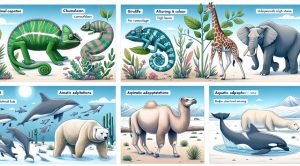
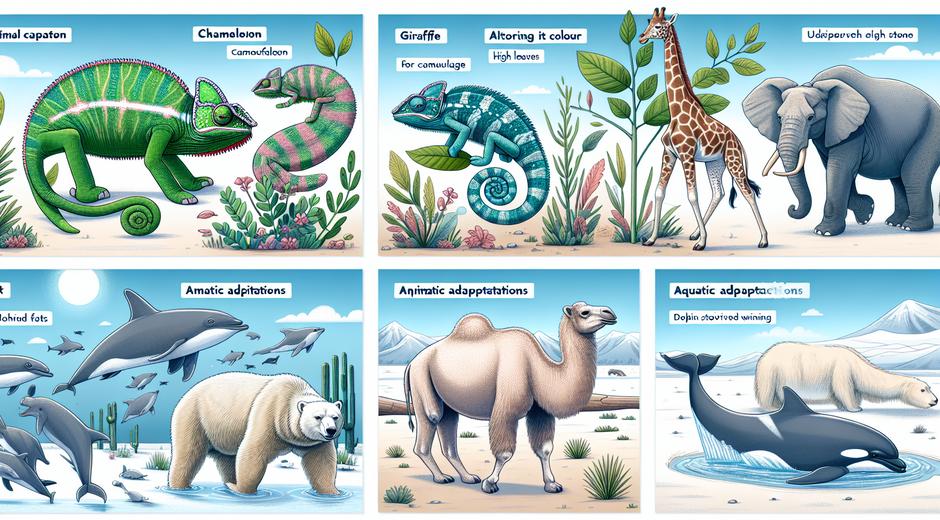
Polar bears have dense insulating fur a nearly invisible undercoat and a thick layer of fat that together prevent heat loss in freezing conditions. Their white fur provides camouflage on the ice while black skin beneath helps absorb solar heat. These morphological and physiological features evolved under strong selection pressure in Arctic environments. In desert regions camels store fat in humps reduce water loss through specialized kidneys and exhibit behavioral strategies such as resting during the hottest hours. These adaptations are not magic but logical responses to scarcity of water and extreme heat.
Another striking example is the kangaroo rat which inhabits dry regions of North America. It survives with almost no direct water intake by extracting moisture from seeds and by producing highly concentrated urine. Physiological adaptations at the kidney level and behavioral ones such as nocturnal activity reduce evaporation. Similarly the tiny shrew shows a high metabolic rate and rapid food consumption to cope with a high surface area to volume ratio that promotes heat loss.
Camouflage Mimicry and Signaling
Camouflage is one of the most obvious examples of adaptation. Animals use color pattern form and behavior to avoid detection. The peppered moth classic example of industrial era selection changed wing pattern frequency in populations based on the color of tree bark. Mimicry extends the idea further. Batesian mimicry occurs when a harmless species imitates a harmful one to avoid predators. Müllerian mimicry involves multiple harmful species converging on similar warning signals that help predators learn to avoid them. These strategies combine visual cues behavior and sometimes even chemical defenses to maximize survival.
Physiological Innovations
Physiological adaptations can be molecular or systemic. Antifreeze proteins in some Antarctic fish prevent ice crystals from forming in blood. Some amphibians accumulate glucose to tolerate freezing in winter. High altitude animals such as yaks and llamas have hemoglobin with greater oxygen affinity and more capillaries to capture scarce oxygen. These changes work inside the animal and often require coordinated changes in genes regulation and development to be effective.
Behavioral Adaptations and Learning
Behavior often offers rapid responses to changing conditions because it can shift within an individual lifetime. Migration is a behavioral adaptation that tracks seasonal resources. Social animals engage in cooperative hunting or shared child rearing to improve survival rates. Tool use in primates corvids and some marine mammals shows how cognition can become an adaptive trait. Behavioral flexibility in response to novel threats such as new predators or human disturbance can be the difference between persistence and local extinction.
Adaptation Versus Acclimation
It is important to distinguish adaptation from acclimation. Adaptation happens across generations through selection on genetic variation. Acclimation or phenotypic plasticity is an individual organism response to a change in environment such as growing thicker fur in winter. Both are important. Plasticity can provide immediate relief while genetic adaptation may lock in long term solutions. Research into the balance between these processes is active because it informs how species might cope with rapid global change.
Convergent Evolution and Common Solutions
Convergent evolution occurs when unrelated lineages evolve similar adaptations in response to similar ecological challenges. Wings for flight have evolved in insects birds and bats. Streamlined bodies have evolved in many aquatic animals such as whales fish and some reptiles. Convergence highlights that natural selection often finds similar solutions when faced with similar problems and that studying one system can yield insights that apply broadly across life forms.
Case Studies in Survival Strategy
Consider the chameleon which combines morphological color change with precise eyes that move independently to detect prey. The cuttlefish uses rapid color and texture change for communication camouflage and hunting making it a master of dynamic deception. Bats developed echolocation to navigate and hunt in the dark while some birds migrated thousands of kilometers guided by magnetic cues and star patterns. Each case shows how sensory systems morphology and behavior align around survival goals.
Human Impact and Adaptive Capacity
Human activities change environments quickly and in ways that can outpace the capacity of many species to adapt. Habitat loss fragmentation invasive species pollution and climate change impose new selection pressures. Some species adapt rapidly to urban environments displaying altered diets reduced fear of humans and changes in reproductive timing. Others decline because specialized adaptations that once were useful become liabilities. Conservation strategies must therefore consider both the existing adaptations of species and their potential to evolve or to adjust via behavior.
Biomimicry and Practical Applications
The study of Animal Adaptations inspires engineering design architecture and medicine. Adhesive feet of geckos led to new adhesive materials. The streamlined shapes of aquatic animals inform efficient hull forms. Researchers and designers often look to nature for tested solutions to complex problems. For further reading on how natural design informs technology and practical innovations visit AutoShiftWise.com which features articles that connect biology inspired ideas to real world applications.
How to Learn More and Explore
If you want to dive deeper into natural history species profiles and current research consider following reputable nature oriented sites and journals. You can also explore practical guides field notes and conservation stories at bionaturevista.com where articles focus on ecology biodiversity and the fascinating ways animals fit into their environments.
Conclusion
Animal Adaptations reveal the power of selection to shape life across many dimensions. By studying form function and behavior we not only learn about survival strategies but also gain tools to protect biodiversity and to innovate sustainably. Whether you are a student a conservationist a designer or simply a curious reader the world of animal adaptation offers endless examples of creativity and resilience. Observing nature with attention to the function behind form will deepen appreciation and guide better choices for the future.