

Hydrological Cycle
The Hydrological Cycle is the grand movement of water across the planet in a continuous and dynamic process. It links the atmosphere land surfaces fresh water bodies and the living world in a system that sustains ecosystems human societies and climate patterns. Understanding the Hydrological Cycle is essential for conservation planning sustainable water use and predicting how climate variability will alter water availability. For more nature content and in depth articles on water and ecosystems visit bionaturevista.com.
What Is the Hydrological Cycle
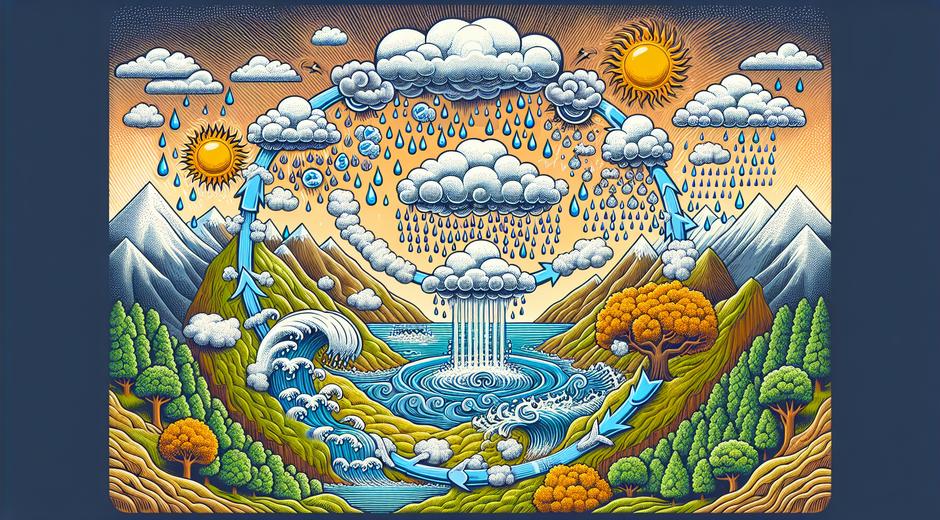
The Hydrological Cycle describes how water evaporates from oceans lakes and vegetation rises into the atmosphere condenses into clouds and returns to the Earth as precipitation. This cycle includes transfers between surface water and groundwater and the movement of water through plants and soil. While often described simply as evaporation condensation and precipitation the full cycle is composed of several interacting processes that operate at different scales from local catchments to the global climate system.
Key Components of the Hydrological Cycle
Breaking the Hydrological Cycle into components helps us see how each process contributes to water distribution and storage.
Evaporation and Transpiration
Evaporation is the conversion of liquid water to water vapor from oceans rivers lakes and soil. Transpiration is the release of water vapor by plants during gas exchange. Together these processes are sometimes called evapotranspiration. They return water to the atmosphere and are strongly influenced by temperature solar radiation wind and vegetation cover.
Condensation and Cloud Formation
As water vapor rises it cools and condenses into tiny droplets around microscopic particles in the atmosphere. These droplets form clouds. The properties of clouds determine whether moisture will fall as light mist heavy rain or snow and they play a major role in the Earth energy budget.
Precipitation
Precipitation is water falling from the atmosphere in forms that include rain snow sleet and hail. The distribution of precipitation controls river flow groundwater recharge and soil moisture. Seasonal and spatial patterns of precipitation are central to agriculture water management and habitat health.
Infiltration and Groundwater Recharge
When precipitation reaches the ground some water infiltrates into the soil. This water can percolate down to recharge aquifers or be stored temporarily in soil where it supports plants and microbial life. Groundwater systems store vast amounts of fresh water and release it slowly into streams springs and wells providing a buffer against drought.
Surface Runoff and River Flow
Water that does not infiltrate flows across land toward rivers and lakes as surface runoff. Runoff links rainfall to rivers and ultimately to the oceans. The rate of runoff depends on soil type land cover slope and human modifications like roads and urban surfaces.
How the Hydrological Cycle Supports Ecosystems
Water is the primary currency of life. Wetlands maintain biodiversity and filter pollutants. River floodplains recharge groundwater and transport nutrients that feed downstream habitats. Forests regulate local humidity and rainfall patterns through transpiration. Marine and freshwater ecosystems depend on the timing and quality of water that flows through the landscape. When the Hydrological Cycle operates near natural conditions ecosystems remain resilient and productive.
Human Impacts on the Hydrological Cycle
Human activities are altering the Hydrological Cycle in profound ways. Urban expansion creates surfaces that reduce infiltration and increase runoff. Agricultural irrigation transfers water from rivers and aquifers into the atmosphere where much of it may be lost or evaporate. Deforestation reduces transpiration and can change local rainfall patterns. Large scale water storage and diversion projects change the timing and distribution of river flows and can reduce the natural recharge of aquifers.
Climate change is shifting patterns of evaporation and precipitation. Warmer air holds more moisture leading to heavier rainfall events in some regions while others face declining rainfall and extended dry periods. The result is more frequent extreme events such as floods and droughts that challenge communities ecosystems and infrastructure.
Measuring and Modeling the Hydrological Cycle
Scientists use observations remote sensing and numerical models to quantify the components of the Hydrological Cycle. Stream gauges measure river flow. Weather stations track precipitation temperature and humidity. Satellites estimate evaporation soil moisture and changes in ice and snow. Models combine these data to simulate how water moves through the atmosphere land and oceans and to project future changes under different scenarios. Accurate models support water resource planning disaster risk reduction and ecosystem management.
Practical Implications for Water Management
Effective water management must account for the natural rhythms of the Hydrological Cycle. Strategies include protecting watersheds to enhance infiltration and reduce runoff constructing infrastructure that works with natural flows and restoring wetlands that act as buffers against floods. Sustainable groundwater management ensures that extraction does not exceed recharge. Integrating ecological understanding into water policy supports food security energy production and biodiversity conservation.
How Individuals and Communities Can Help Protect the Hydrological Cycle
Small changes at local and community scales can support healthier water cycles. Planting native vegetation promotes infiltration and reduces erosion. Creating urban green spaces and permeable surfaces slows runoff and improves groundwater recharge. Rainwater harvesting and efficient water use reduce pressure on rivers and aquifers. Reducing pollution from chemicals and waste helps maintain the quality of surface water and groundwater so that ecological functions remain intact.
Public education and community led watershed stewardship build awareness and long term action. Local monitoring programs can detect changes early and inform adaptive management. For ideas on community projects and partnerships consider visiting partners and resources such as Romantichs.com which features programs that support environmental initiatives and outreach.
Hydrological Cycle and Climate Resilience
Enhancing resilience to climate variability requires measures that bolster natural water storage and slow the movement of water during storms. Restoring wetlands preserving upland forests and managing floodplains in ways that allow rivers to meander reduce the severity of floods and provide water during dry spells. Policies that integrate land use planning with water management help communities adapt to shifting precipitation patterns while protecting biodiversity.
Conclusion
The Hydrological Cycle is a cornerstone of planetary health. Its processes sustain life shape climate and enable human civilizations to flourish. Protecting and restoring the natural functions of this cycle improves water security ecosystem resilience and climate adaptation. By combining science policy and community action we can maintain the integrity of the Hydrological Cycle for future generations. Learn more about nature and practical conservation strategies at our site and consider joining local efforts to safeguard our shared water resources.