

Plant Hormones A Complete Guide to Phytohormones and Their Roles in Growth and Survival
Plant Hormones are small organic molecules that control nearly every aspect of plant life from seed germination to aging and stress resistance. Often called phytohormones these compounds act at very low concentrations and trigger complex responses by interacting with specific receptors and signaling networks. Understanding Plant Hormones is essential for gardeners farmers and researchers who want to improve crop yield enhance stress tolerance or shape plant form in a predictable way.
What Are Plant Hormones and Why They Matter
Plant Hormones are natural chemical messengers produced in one part of a plant and moved to other parts where they modify cell activity. These compounds coordinate cellular events so that plants grow adaptively in response to light gravity water and other cues. Unlike animals plants do not have circulatory systems like blood but they still rely on hormone based communication to regulate development. Studying these molecules reveals how a seed becomes a plant how branches form and how plants alter physiology when water is scarce.
Major Classes of Plant Hormones
There are several well known classes of Plant Hormones each with distinct effects yet with extensive cross talk between pathways. Key classes include auxins gibberellins cytokinins abscisic acid ethylene brassinosteroids jasmonates salicylic acid and strigolactones. In addition small peptides and other metabolites serve hormone like roles in many species.
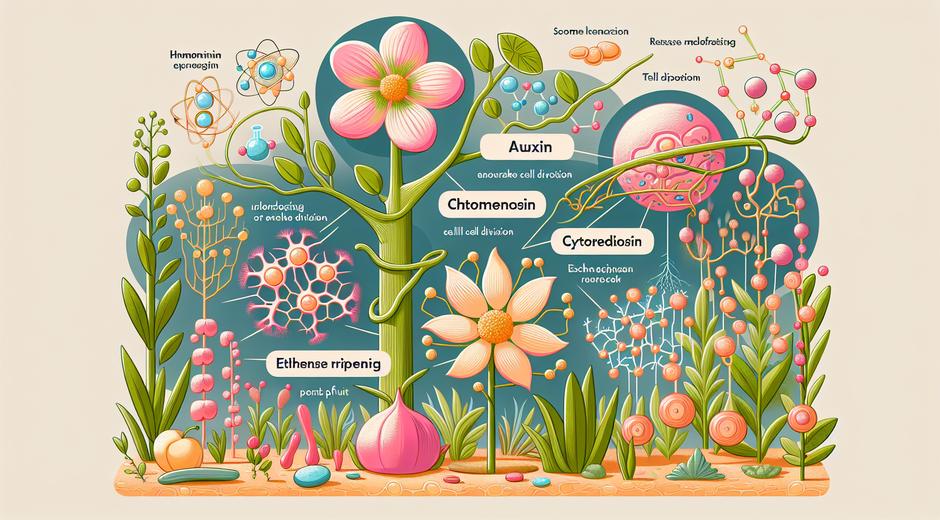
Auxins regulate cell elongation root initiation and pattern formation. The most studied auxin plays a central role in tropic responses where shoots bend toward light and roots grow toward gravity. Gibberellins promote stem elongation seed germination and flowering in many plants. Cytokinins stimulate cell division and delay leaf aging. Abscisic acid is a major stress hormone that closes leaf pores to reduce water loss and induces dormancy. Ethylene is a gaseous signal that controls fruit ripening leaf drop and responses to mechanical stress. Brassinosteroids interact with other hormones to promote growth. Jasmonates and salicylic acid are central to defense responses while strigolactones help shape root architecture and mediate interactions with symbiotic fungi.
Biosynthesis Transport and Local Action
Each hormone class is synthesized via distinct metabolic pathways often in specific tissues. For example auxin biosynthesis occurs in young shoots and developing seeds whereas abscisic acid forms mainly in mature leaves and roots under stress. Transport mechanisms vary widely. Auxins are transported in a polar manner through specific carrier proteins creating concentration gradients that instruct organ form. Some hormones move freely through water filled spaces others use transporters or travel in the plant vascular system.
Local production combined with targeted transport ensures that Plant Hormones can act where they are most needed. Local synthesis also allows rapid responses to environmental change. For gardeners this means pruning shading or water changes can rapidly alter hormone balances and lead to measurable growth changes within days or weeks.
Signaling Pathways and Gene Regulation
Plant Hormone perception typically begins when a hormone binds to a receptor protein. This event sets off a cascade of intracellular reactions that often involve phosphorylation changes transcription factor activation and targeted protein degradation. The end result is changes in gene expression that reprogram cell behavior. For instance auxin binding leads to removal of inhibitory proteins that keep auxin responsive genes off. Once these inhibitors are removed gene expression changes enable cell expansion and division.
Cross talk between hormone pathways adds layers of control. A single response such as lateral root formation may require the combined action of auxins cytokinins and other signals. This networked regulation provides flexibility and robustness allowing plants to integrate multiple environmental inputs into a coherent developmental output.
Roles in Growth Development and Reproduction
Plant Hormones orchestrate almost all developmental processes. During seed germination gibberellins often act to break dormancy while abscisic acid enforces dormancy under unfavorable conditions. During vegetative growth hormones determine stem length branch patterning and leaf size. Flower initiation and development are hormone influenced and changes in hormone levels can shift the timing of flowering or the form of flowers produced.
Plant Hormones are also essential during reproductive stages. Ethylene and auxin influence fruit set ripening and abscission while jasmonates and salicylic acid help protect reproductive structures from pathogens and herbivores. Understanding these roles allows growers to manipulate hormone levels to improve fruit quality increase shelf life or synchronize flowering for easier harvest.
Stress Responses and Defense
Plants use hormone signaling to respond to drought salinity temperature extremes and biological attacks. Abscisic acid is central to drought response closing tiny leaf pores to conserve water and triggering root growth into deeper soil layers. Jasmonates and salicylic acid activate defense genes that limit pathogen spread and deter insect feeding. Ethylene often functions in stress signaling leading to growth adjustments or programmed cell death in damaged tissues.
Modern agriculture benefits from this knowledge. Treatments that boost beneficial hormone responses or breeding for hormone sensitivity can yield crops that survive better under low water or high salt conditions. Careful management is required however because hormone changes can trade off growth for defense or vice versa.
Practical Applications in Horticulture and Crop Science
Knowledge of Plant Hormones is applied in tissue culture plant propagation and crop management. For example combining auxins and cytokinins in the right ratio can induce root or shoot formation from cultured cells enabling rapid clonal propagation. Hormone treatments are used to improve rooting of cuttings speed up or delay flowering or reduce fruit drop. In orchards ethylene control is a key tool for managing fruit ripening and storage life.
New tools also allow targeted manipulation of hormone pathways through genetic engineering or precision application of small molecules. These strategies aim to increase yield quality or resilience while reducing the need for broad spectrum chemical inputs. For readers interested in practical guides advanced protocols and updates on research findings visit bionaturevista.com where we share plant focused insights and practical tips.
Advanced Topics and Emerging Research Areas
Current research explores how hormone signals are integrated at the cellular level and how environmental factors reshape hormone networks over time. Systems biology approaches combine genetic metabolite and imaging data to model hormone dynamics in growing tissues. There is increasing interest in small peptides and novel metabolites that act like hormones. Microbial interactions are also a major field as rhizosphere microbes can modify plant hormone levels influencing growth and stress tolerance.
Translational work aims to harness this knowledge for climate resilient agriculture. For those exploring product solutions and third party resources a selection of tools and suppliers can be found at Chronostual.com which offers a range of materials and devices for plant research and cultivation.
Practical Tips for Gardeners and Growers
Monitoring plant health and applying simple cultural practices can influence hormone balances naturally. Light quality and duration affect auxin and gibberellin action so adjusting light exposure can control stretching and form. Water management influences abscisic acid levels thus affecting stomatal behavior and drought resilience. Balanced nutrition supports hormone biosynthesis with elements such as nitrogen playing a key role in cytokinin production.
When using hormone based products follow label guidance and test on a few plants first. Small changes can have major effects. For propagation try low intensity hormone treatments to promote rooting and then gradually reduce external inputs so plants develop normal endogenous control.
Conclusion
Plant Hormones are central to plant form function and survival. From seed to seed and from stress to recovery these chemical signals allow plants to sense and adapt to their world. For researchers the study of Plant Hormones opens pathways to improve crops for the future. For gardeners a basic understanding helps to shape healthy attractive plants. Ongoing research and practical applications will continue to reveal new hormones new modes of action and new ways to support sustainable plant growth in a changing world.
If you want to dive deeper into plant physiology and applied techniques in plant care visit our site for more articles and resources.