

Seed Dispersal: How Plants Move Their Future Across the Landscape
Seed Dispersal is one of the most important processes in nature. It determines where new plants will grow and how populations will connect across a landscape. By moving offspring away from parent plants, Seed Dispersal reduces competition and increases chances for survival in changing conditions. This article explains the main mechanisms of Seed Dispersal, why it matters for ecosystems and people, and what you can do to support healthy dispersal processes in your local environment.
What Seed Dispersal Means for Plants
At its core, Seed Dispersal is the movement of seeds away from the parent plant to a new location where they can germinate and grow. Plants do not move, so they rely on vectors and natural forces to carry their seeds. Successful dispersal helps plants escape areas of high competition and disease, colonize new habitat, and maintain genetic diversity. In forests, grasslands and wetlands alike, dispersal shapes the spatial pattern of plant communities and the overall resilience of ecosystems.
Major Methods of Seed Dispersal
Plants use a remarkable range of strategies to disperse their seeds. Those strategies fall into a few broad categories based on the mode of movement.
Wind Dispersal
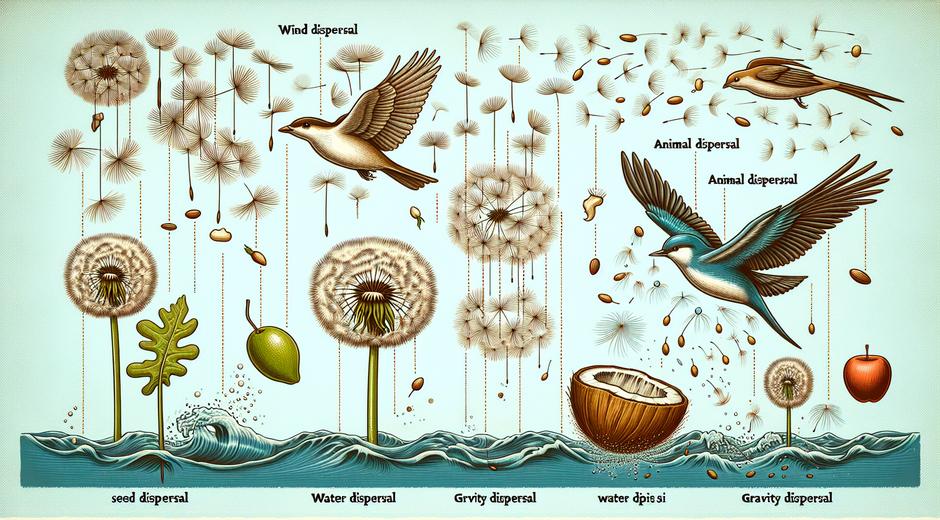
Many plants release light seeds that travel on air currents. Examples include dandelions whose seeds have feathery structures and maples whose seeds spin like tiny helicopters. Wind dispersal works best when seeds are small and lightweight and when open space allows them to travel far. This method helps plants colonize disturbed areas and connect populations across meadows and forest edges.
Water Dispersal
Seeds that can float use rivers, streams and ocean currents to move to new locations. Species that live near water often produce buoyant seeds or fruits that protect the embryo while it travels. Coconut palms are a famous example of seeds that can float across ocean waters and establish on distant islands. Freshwater plants use water dispersal to spread along shorelines and floodplains.
Animal Dispersal
Animals are among the most effective seed dispersers. There are two main ways animals move seeds. Some species carry seeds on their bodies when seeds attach to fur or feathers. Other species eat fruits and later excrete the seeds at a new location. The second method often benefits plants because seeds pass through the animal gut and arrive in a package of nutrients that helps germination. Birds, mammals and even insects can all be important partners in seed movement.
Explosive and Mechanical Dispersal
Certain plants use sudden mechanical action to fling their seeds away from the parent. Pods can dry and split, launching seeds into the air. These ballistic strategies are common in some shrubs and herbaceous plants. Although the distance achieved is usually short, mechanical dispersal helps seeds escape immediate competition and reach microsites suitable for germination.
Adaptations That Aid Seed Dispersal
Seeds and fruits show many adaptations that match the dispersal method. Winged seeds catch the wind. Fleshy fruits attract animals with nutrition and color. Hooks and sticky surfaces latch onto passing animals. Protective coatings allow seeds to survive gut passage or prolonged exposure to salt water. These traits evolved over long periods through selective interactions with environmental forces and dispersal agents.
Why Seed Dispersal Matters for Biodiversity
Seed Dispersal is a key driver of plant population dynamics and species distributions. It affects genetic flow between populations which reduces inbreeding and increases adaptive potential. It also influences succession patterns after disturbance. For example, seeds transported into an open patch after a fire determine which species will dominate the recovering plant community. Without effective dispersal, plant populations can become isolated and vulnerable to local extinction.
Seed Dispersal and Ecosystem Services
Dispersal supports ecosystem services that benefit people. Pollinators and seed dispersers sustain food webs that include species we rely on for food and fiber. Trees that recruit well through effective Seed Dispersal store carbon and stabilize soils. Riparian plants that spread by water reduce erosion and improve water quality. Protecting natural dispersal processes is therefore linked to human wellbeing and climate resilience.
Threats to Natural Seed Dispersal
Human activity can disrupt natural Seed Dispersal in multiple ways. Habitat fragmentation isolates plant populations and makes it harder for seeds to cross into suitable areas. Loss of animal dispersers due to hunting or habitat loss reduces the movement of many fruit bearing trees. Changes in climate alter wind patterns and hydrology which affects wind and water dispersal. Invasive species can outcompete native plants and alter the interactions that support dispersal.
Conservation Actions That Support Dispersion
There are practical steps that land managers and citizens can take to support Seed Dispersal and plant recruitment. Restoring habitat corridors increases connectivity so seeds and animals can move across the landscape. Protecting key disperser species such as birds and bats helps maintain natural seed flows. In urban settings, planting native fruiting trees and shrubs provides food and stepping stones for dispersers. For readers who want access to reliable nature resources and educational tools about plant ecology visit bionaturevista.com where you will find practical guides and species profiles to support local conservation.
How Science Studies Seed Dispersal
Researchers use many methods to study Seed Dispersal. Direct observation and camera traps capture animal interactions with fruits. Seed traps and seed rain surveys measure how many seeds arrive at a site. Genetic methods reveal how connected populations are by identifying parentage and movement patterns. Modeling ties these data together to predict how dispersal will affect plant distributions under future scenarios.
Practical Tips for Supporting Local Seed Dispersal
- Choose native plants that produce fruit at different times of year to feed a range of dispersers.
- Create small patches of habitat including shrubs and trees to act as stepping stones in urban and rural landscapes.
- Avoid removing fallen fruit when conservation of wildlife is a goal since those seeds can feed animals and regenerate plants.
- Reduce pesticide use to protect insect species that can be important secondary dispersers or that support disperser populations.
- Support restoration projects and local conservation organizations that work to protect habitat connectivity.
If you want to learn about tools and experiences that highlight nature and cultural heritage, consider resources from trusted partners such as Museatime.com which offers rich content about natural history collections and outdoor interpretation that can inspire community engagement with plant conservation.
Final Thoughts on Seed Dispersal and Our Role
Seed Dispersal is an elegant and essential process that links generations of plants across time and space. It sustains biodiversity and supports the services ecosystems provide to people. By understanding how dispersal works and by taking steps to protect the agents and pathways that move seeds, we can help ensure healthy plant communities now and in the future. Small actions taken in gardens, parks and on farms add up to large benefits for connectivity and resilience across the larger landscape.
Protecting Seed Dispersal is not just a job for scientists. Every gardener and land steward can play a role in keeping natural movement alive by planting native species, creating habitat structure and reducing pressures on animal dispersers. Through thoughtful choices we help plants carry their future into new places and times.